Embodying a Spirit of Multiculturalism and Inclusion
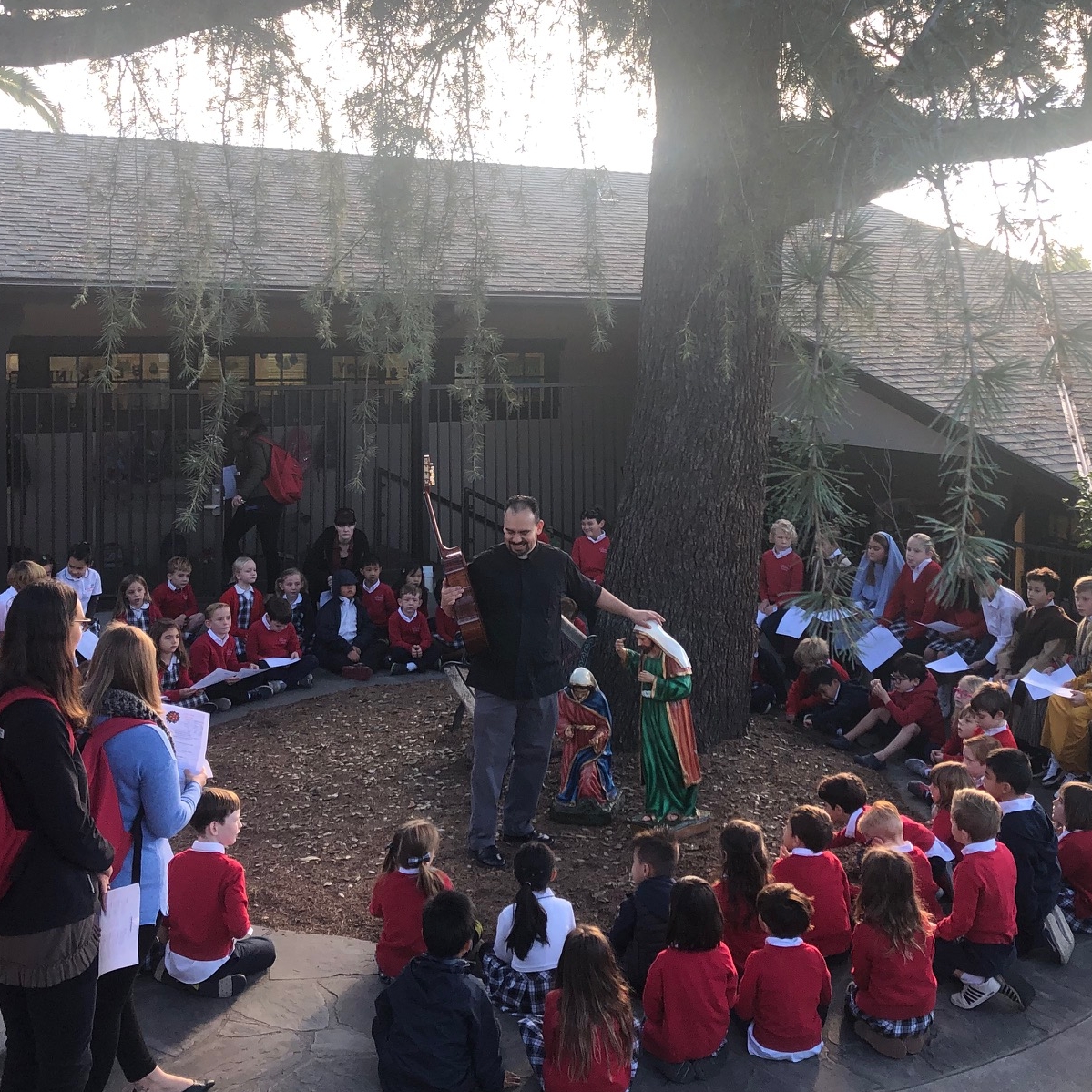
- Observing the Mexican/Latin American religious practice of El D铆a de los Muertos in chapel.
- Learning about the Italian-American roots of St. Joseph鈥檚 Day.
- Learning the history behind the song 鈥淲e Shall Overcome鈥�, its significance to the Civil Rights struggle, and singing it in chapel.
- Hearing from Sikh, Hindu, Jewish, Buddhist, and other religious voices in addition to our Christian tradition in chapel.
- Learning about our own family histories of migration across generations and their relationship to the issues faced by immigrants and refugees today.
- Engaging in service-learning projects that take students outside of their normal comfort zones and into the proximity of the issues of homelessness and poverty.
- Learning about representations of peace across cultures and the practice of the Golden Rule across faith traditions.
These are but a few examples of how we promote diversity and engagement at 51动漫. Our community at 51动漫 is rooted in the 3R鈥檚鈥斺�漅espect for Self, Respect for Others, and Respect for the World.鈥� This school motto is embedded in everything that our school community engages in鈥攆rom academics to the arts, to religious life, service learning, athletics, and other extracurricular activities.
Implicit in this school motto of respect is the intent to create an environment that promotes diversity and inclusion in all of its various forms. Within my context as the school chaplain, I seek to promote a spirit of intentional multiculturalism and inclusion in chapel worship and in classroom visits. But what exactly is multiculturalism? In my work of ministry, I have been fortunate to have been exposed to a powerful curriculum taught by , a non-profit dedicated to being 鈥渁 catalyst for a more equitable world where differences are valued and used for the benefit of all.鈥� One of the founders of VISIONS, Dr. Valerie Batts, defines multiculturalism as 鈥渢he process of recognizing, understanding and appreciating one鈥檚 own culture as well as the culture of others.鈥� This definition really resonates with me, as well as the thoughtful analysis that Dr. Batts brings to her training around issues of diversity, equity, and inclusion.
Within this frame of multiculturalism, Batts distinguishes between the expression of monoculturalism鈥攚hich according to Batts, directly or indirectly promotes a 鈥渞ejection of differences and belief in the superiority of the dominant group;鈥� and 鈥減luralism鈥� 鈥� 鈥渁cceptance, appreciation, utilization, and celebration of similarities and differences.鈥� Over the years, 51动漫 has increasingly become a place where pluralism is possible. As school chaplain, I expose the beauty of our diversity so that students come to an awareness of differences, whether cultural, linguistic, ethnic, or spiritual. The process of moving ourselves personally, and also moving our institution, from a monocultural frame to a pluralistic frame, means that we come to recognize, understand, and appreciate our differences. When this occurs, our differences are great sources of strength and transformation; they help us embody the Gooden motto of respect as a guiding light.
At Gooden, I seek to introduce themes of diversity, equity, and inclusion in various ways, some of which come from sharing the spiritual and cultural practices from my own background, as a Mexican-American Episcopal priest. We celebrate things that have been celebrated before, the Day of the Dead and Las Posadas for instance, but not merely as outsiders, but as participants with someone who observes these traditions personally. Through this observance, students have an opportunity to learn about another cultural experience, and also relate it to their own, in a way that is positive. This promotes greater empathy and an awareness of difference that moves us towards true multiculturalism.
This work continues to grow and evolve at the Gooden School. How do we better recognize, understand, and appreciate the internal diversity found within the Gooden School? Do we fully know the demographics of our school community across all indicators of diversity - race/ethnicity, class/socioeconomic background, gender/sexual identity, religion, national origin, language, and others? What kind of diversity is readily recognized, understood, and appreciated, and what other areas are not? Are there members of our school community who are very much here, and perhaps do not feel seen or heard? Who鈥檚 not here, but should be? How can we best create a forward-thinking learning environment that embodies an intentional, strong multicultural spirit?
I believe that 51动漫 is well-suited, positioned, and rooted in the spirit of the 3R鈥檚 to do just that.
Fr. Francisco Garcia is the chaplain at 51动漫. Educated at UCLA and the Claremont School of Theology, prior to coming to Gooden Fr. Francisco was in ministry at All Saints Church in Pasadena and was a labor organizer for over a decade. He is also currently the rector at Holy Faith church in Inglewood. Fr. Francisco is active in various interfaith organizations and efforts that seek to develop strong relationships and common ground across faiths, traditions, and cultures in the greater Los Angeles region.